The Best Massage Gun for Runners Might Be a $9 Foam Roller
If you’ve been eyeing the best massage gun for runners in the Black Friday sales, hold that thought for a minute. Recovery gear is one of the easiest places to overspend in running, and the research behind most of it is more modest than the marketing suggests.
This guide compares foam rollers, massage balls, massage guns and compression socks at budget, mid and premium price points. It’s written for Perth runners who do a few 5km or 10km runs a week, train with a club, or are building up to their first event, and want to know what’s worth buying for tight calves and stiff legs.
Information checked November 2026. Prices change often, so check the retailer before you buy.
Recovery Gear at a Glance
- Foam rollers are the cheapest option with the most research behind them. A basic 45cm roller costs $9 at Kmart.
- Massage balls (or a tennis ball) reach spots a roller can’t, such as the soles of your feet and around the hips.
- Massage guns are convenient and targeted, but the evidence is thinner and they cost far more. At Bing Lee in November 2026, prices ranged from $77 to $647.
- Compression socks may help you feel less sore after a hard run. Pairs in the Perth Running Clubs shop start under $30.
- None of these replace the basics. Sleep, enough food and sensible training load matter more than any gadget.
What Does the Research Say About Recovery Gear?
It helps to know what you’re paying for. A 2023 review by La Trobe University physiologists Matthew Driller and Alana Leabeater, published in the journal Sports, looked at the recovery strategies athletes use. Its title sums it up: “Fundamentals or Icing on Top of the Cake?”
The authors rated foam rolling, compression garments and active recovery (such as an easy walk or spin) among the strategies with stronger evidence. Massage guns, recovery boots and saunas had less research support and more mixed results. Above all, they found that sleep, nutrition and how you plan your training have the strongest support, and should be sorted before you add devices.
So a recovery tool is the icing. Seven to nine hours of sleep, a decent meal after your long run and not doubling your weekly kilometres overnight are the cake.
Foam Rollers: The Budget Pick That Holds Up
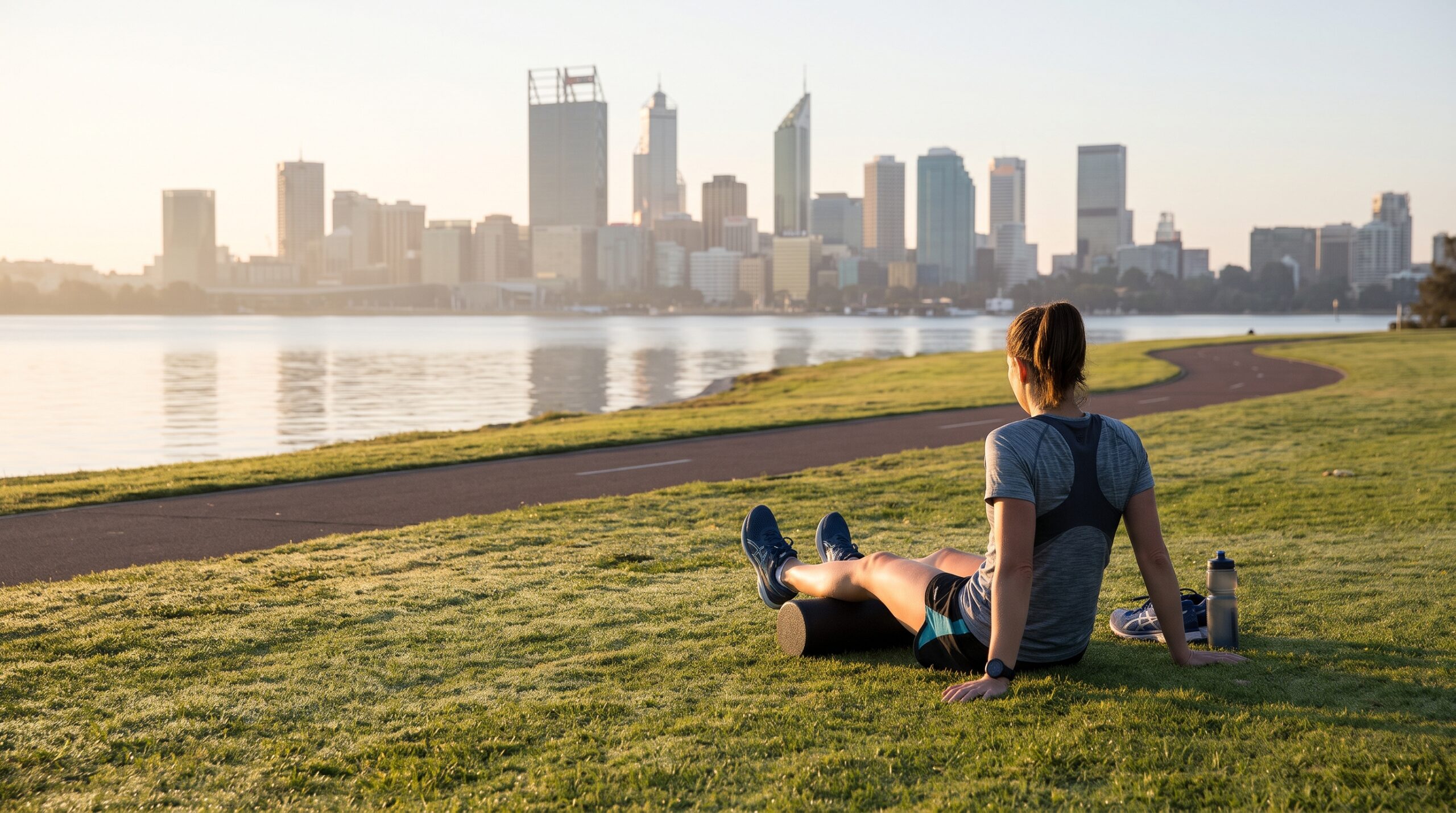
A foam roller is a firm cylinder of foam you lie on and roll your muscles over, using your own body weight for pressure. It’s the cheapest recovery tool on this list and the most studied.
Does foam rolling work for runners?
A 2019 meta-analysis by Wiewelhove and colleagues in Frontiers in Physiology pooled the research. Rolling before exercise improved sprint performance by 0.7% and flexibility by 4.0%, both small effects. Rolling after exercise reduced how sore people felt by about 6%.
The authors described the overall effects as “rather minor and partly negligible”, though useful in some cases. In plain terms: foam rolling won’t transform your running, but it’s a cheap, low-risk way to feel a bit looser, especially as part of a warm-up.
Which foam roller should you buy?
- Budget: a plain 45 x 15cm foam roller. Kmart sells one for $9. Smooth, softer rollers suit beginners.
- Mid-range: a firmer, textured or hollow-core roller. It’s more durable and gives more pressure, which some runners like for calves and quads.
- Premium: a vibrating roller. It combines rolling with vibration, but costs more and isn’t backed by much extra evidence.
The main downside is size. A full-length roller takes up space in a small apartment, and it’s awkward to pack for a trip.
Massage Balls: Small, Cheap and Useful for Feet
A massage ball is a firm rubber or spiky ball about the size of a tennis ball. You stand or lean on it to work small areas that a roller can’t reach well.
Runners often use one under the foot after a long run, or against a wall for the glutes and hips. It fits in a gym bag, and a plain tennis ball does a similar job if you already have one. Keep the pressure moderate, and stop if something feels sharp rather than just tight.
Massage Guns: Convenient, but Not Magic
A massage gun is a handheld, battery-powered device that delivers rapid pulses into the muscle through a padded head. This is often called percussive therapy.
Are massage guns good for runners?
A 2023 systematic review in the Journal of Functional Morphology and Kinesiology found massage guns can help short-term range of motion, flexibility and recovery-related outcomes. It found no benefit for strength, balance, acceleration, agility or explosive efforts, and in some studies performance dropped. Only 11 studies were included, and the authors called for better research.
Newer research is more encouraging for runners’ calves. A 2026 randomised trial in Scientific Reports, summarised by News-Medical, gave 80 recreational runners a hard calf workout. Those who used a massage gun twice a day for 72 hours reported less soreness and had less calf and Achilles stiffness than those who simply rested. Ice massage, though, produced the biggest improvement in how recovered people felt. The study had no placebo group, and the authors were clear it doesn’t prove injury prevention.
Which massage gun should you buy?
At Bing Lee in November 2026, massage guns ranged from $77 (a compact Beurer model on sale) to $647 (the Theragun PRO Plus). Here’s a rough way to think about price tiers:
- Budget (under $130): compact guns with fewer settings. Fine for calves, quads and hamstrings.
- Mid-range ($130-$300): mini and travel-size models from established brands. Lighter, quieter and usually better built.
- Premium ($300+): full-size guns with more power, app connection and extra attachments. Most beginners don’t need this.
Look at weight (lighter is easier to hold on your own calves), noise, battery life and whether the lowest setting is gentle enough for you. A low setting used briefly is enough for most runners.
How to use a massage gun safely
University of Utah Health advises keeping to two to three minutes per muscle group and letting the device do the work rather than pressing hard. Start on a slow, light setting.
- Avoid bony areas, the front of the neck, the groin, and any bruised, cut or broken skin.
- Don’t use it on a fresh injury or an area that’s swollen or very painful.
- If you have a medical condition, are pregnant, or have ongoing pain, check with your GP or physio first.
The La Trobe review also noted rare case reports of serious harm from heavy use, and recommended a cautious approach. Gentle and short is the rule.
Compression Socks: A Small Comfort Boost
Compression socks are tight, graduated socks that squeeze the lower leg, measured in mmHg (millimetres of mercury). Sports versions usually sit between 10-15 mmHg and 20-30 mmHg.
The evidence is mixed but leans positive for how you feel. The La Trobe review rated compression garments among the better-supported recovery options. A small Australian Institute of Sport study, reported by Runner’s World Australia, found runners who wore compression socks between two 5km time trials reported less soreness and fatigue, though their second run wasn’t faster overall.
They’re cheap enough to try, and handy for long drives or flights to events. Skip them in the middle of a hot Perth summer if they make you uncomfortable.
Foam Roller vs Massage Gun vs the Rest: Comparison
| Tool | Best for | Price (checked Nov 2026) | Where to look |
|---|---|---|---|
| Foam roller | Beginners, warm-ups, quads, calves, glutes | From $9 (Kmart) | Kmart, sports stores |
| Massage ball | Feet, hips, travel | Low cost; a tennis ball works | Sports stores |
| Massage gun | Targeted calf and quad work, convenience | $77-$647 (Bing Lee) | Electronics and sports stores |
| Compression socks | Feeling less sore after hard runs, travel | $24.95-$34.95 | Our shop |
Compression Socks in Our Shop
We don’t stock foam rollers or massage guns yet, but these compression socks are in the Perth Running Clubs shop. Prices were correct when checked and may change.
- CAMBIVO Sports Crew Socks (10-15 mmHg), $27.99. Verdict: lighter compression, a good first pair if you’re unsure about the tight feel.
- aZengear Compression Socks (20-30 mmHg), $24.95. Verdict: the cheapest firmer option, handy for flights and long drives.
- Physix Gear Compression Socks (20-30 mmHg), $34.95. Verdict: a firmer single pair for post-run recovery.
- CAMBIVO 3 Pairs Compression Socks (20-30 mmHg), $29.99. Verdict: best value if you want a pair for each long-run day.
So, What’s Worth Buying?
If you’re new to running, start with a basic foam roller and use it for five to ten minutes as part of your warm-up or after a run. Add a massage ball if your feet get tight. That covers most needs for under $20.
A massage gun makes sense if you’ll actually use it, such as on the couch after a Saturday long run, and the convenience is worth the money to you. A compact or mini model is plenty. Compression socks are a cheap extra if you like how they feel.
What isn’t worth it: paying premium prices expecting faster race times or fewer injuries. No recovery tool has been shown to do that reliably. If shins or knees keep niggling, see a physio or GP rather than buying another gadget.
And don’t forget the free option. A slow, social run with a club is active recovery too. Browse the Perth run club directory to find a relaxed group near you, or check our Black Friday running deals guide before you buy anything this month.
Frequently Asked Questions
Is a massage gun or foam roller better for runners?
A foam roller has more research behind it and costs much less, so it’s the better starting point for most runners. A massage gun is more convenient for targeting one spot, like your calves, and recent research suggests it can reduce soreness and stiffness in the short term. Neither has been shown to prevent injuries.
Should I foam roll before or after a run?
Both are fine. A 2019 meta-analysis found small benefits for flexibility and sprint performance when rolling before exercise, and a small drop in soreness when rolling after. A few minutes before your run as part of a warm-up is a sensible place to start.
How long should I use a massage gun on my calves?
Keep it to about two to three minutes per muscle group on a light setting, and let the device do the work rather than pressing hard. Avoid bony areas and any bruised or injured spots. Stop if it hurts.
Do compression socks help with running recovery?
They may help you feel less sore and tired after hard sessions, which is why reviews rate them among the better-supported recovery options. The effect on actual performance is small or unclear. They’re cheap to try, and many runners like them for travel.
Can recovery gear fix shin splints?
No. Rolling or massage might make your legs feel better, but ongoing shin pain usually needs a look at your training load, shoes and strength. See a physio or GP if pain lasts more than a few days or gets worse when you run.
What’s the cheapest way to recover after a long run?
Sleep well, eat a proper meal with carbohydrates and protein, drink enough fluid, and keep the next day easy with a walk or gentle run. A $9 foam roller and a tennis ball cover most of the rest.
Perth Running Clubs may earn a commission from purchases made through links on this page.