A Plant Based Runner Diet: The Short Version
A plant based runner diet can fuel everything from a 5km social run along the Swan River to a full marathon. You just need to plan it a little more than someone who eats meat and dairy. The basics are simple: eat enough overall, get carbohydrate in around your runs, spread protein through the day, and keep an eye on a handful of nutrients that plant foods supply less easily.
This guide is for Perth runners who eat vegan, vegetarian or mostly plant-based and want easy breakfasts and recovery meals that work with a 5:30am alarm. It is general information, not a personal plan. Sports nutrition is individual, so if you have specific goals or concerns, an Accredited Sports Dietitian or your GP is the right person to see.
Information checked November 2026.
Can You Run Well on a Plant-Based Diet?
Yes. Plenty of runners train and race on plants, and you are not alone: Sports Dietitians Australia notes that about 2.5 million Australians reported following a plant-based diet in 2019. People choose it for ethical, health, environmental, religious or budget reasons.
The catch is that plant foods are bulkier and higher in fibre, so it is easier to under-eat without noticing. A review from the Gatorade Sports Science Institute on vegetarian and vegan athletes puts it plainly: meeting your energy needs is crucial for good nutrition and performance. Athletes with high energy needs may need around 5 to 8 meals and snacks a day.
So the first rule is not about protein or supplements. It is simply: eat enough, and eat often enough, to cover your training.
How Much Protein Do Plant-Based Runners Need?
The same GSSI review gives a protein range of 1.2 to 2.0g per kilogram of body weight per day for athletes. For a 60kg runner, that works out at roughly 72 to 120g across the day. Recreational runners doing a few easy kilometres a week will sit towards the lower end.
After a run, Sports Dietitians Australia’s recovery guidance suggests including 15 to 30g of protein in your post-training snack or meal, depending on your body size. Your body keeps using protein for 24 to 48 hours after exercise, so spreading it over breakfast, lunch, dinner and snacks works better than one huge serve.
Do I need to combine proteins at every meal?
No. You may have heard you need to pair rice and beans on the same plate. The GSSI review says vegetarians do not need specific combinations of plant proteins at each meal. Eating a variety of protein foods over the day covers all the essential amino acids, which Healthdirect also confirms.
Where plant protein comes from
- Legumes: lentils, chickpeas, black beans, kidney beans, edamame
- Soy foods: firm tofu, tempeh, soy milk, soy yoghurt
- Nuts and seeds: peanut butter, almonds, hemp seeds, chia, pepitas
- Wholegrains: oats, quinoa, buckwheat, brown rice, wholegrain bread
- Dairy and eggs if you are vegetarian rather than vegan: Greek yoghurt, milk, eggs
As a rough guide, the GSSI review says plant protein foods provide more than 7g of protein per serve, while grains, cereals and starchy vegetables add 2 to 3g per serve. Those smaller amounts add up over a day.
The Nutrients Plant-Based Runners Should Watch
A varied plant-based diet covers most needs. A few nutrients need a bit more attention, and they matter for runners because they affect energy, bones and recovery.
Iron
Plant foods contain non-haem iron, which the body absorbs less easily than the iron in meat. Healthdirect notes that people who menstruate need about twice as much iron as those who don’t. Good sources include lentils, chickpeas, beans, firm tofu, tempeh, cashews, wholegrain and fortified cereals, and leafy greens.
Two simple habits help, according to Health and Wellbeing Queensland: pair iron foods with vitamin C (tomato, capsicum, citrus, berries), and have your tea or coffee away from iron-rich meals rather than with them. Don’t start iron tablets on a hunch. If you feel unusually flat or tired, ask your GP about a blood test first.
Vitamin B12
B12 is the one nutrient vegans can’t reliably get from unfortified plant foods. Healthdirect’s advice is direct: if you follow a strict vegan diet, it is recommended you take a vitamin B12 supplement. Fortified plant milks, some meat alternatives and nutritional yeast can add B12 too, so check the label.
Calcium
Runners need calcium for bone health. Vegan sources include tofu set with calcium, calcium-fortified plant milks (look for about 100mg per 100mL, as Health and Wellbeing Queensland suggests), almonds, unhulled tahini and Asian greens. Spinach is not a great calcium source because the calcium is poorly absorbed.
Omega-3, zinc and vitamin D
- Omega-3: chia, flax, hemp seeds and walnuts supply plant omega-3. Healthdirect notes vegans can also take an algae-based omega-3 supplement.
- Zinc: found in legumes, nuts, seeds, wholegrains and tofu, but absorbed less well from plants. Health and Wellbeing Queensland suggests vegans ask an Accredited Practising Dietitian about it.
- Vitamin D: most people get enough from safe sun exposure. Dawn runners who are covered up and wearing sunscreen may get less than they think, so ask your GP if you are concerned.
Easy Plant-Based Breakfasts Before a Morning Run
Before an early run, you want something small, carb-based and easy on the stomach. Keep fibre, fat and large serves of protein for after. How much you need depends on how long and hard you are going. For a gentle 5km, many people are fine with a small snack or nothing. For a long run or hills session, Runner’s World Australia suggests 30 to 60g of carbohydrate about an hour before.
Ideas that work at 5am:
- Half a bagel or a slice of white toast with jam or a thin layer of peanut butter
- A banana, or two Medjool dates, on the drive to Kings Park or Cottesloe
- A small bowl of quick oats made with soy milk and a drizzle of maple syrup
- A plain rice cake with honey (vegetarian) or golden syrup (vegan)
- A small glass of fortified soy milk if solids don’t sit well
Test new options on easy runs, not race day. Our upcoming guide to what to eat before a 5:30am run goes deeper into timing and pre-run snacks.
High-Protein Plant-Based Recovery Breakfasts
This is where plant-based runners can get it wrong by having a piece of fruit and a black coffee and calling it breakfast. Aim to combine carbohydrate with a solid serve of protein, ideally within an hour if you are training again within eight hours.
1. Tofu scramble on toast
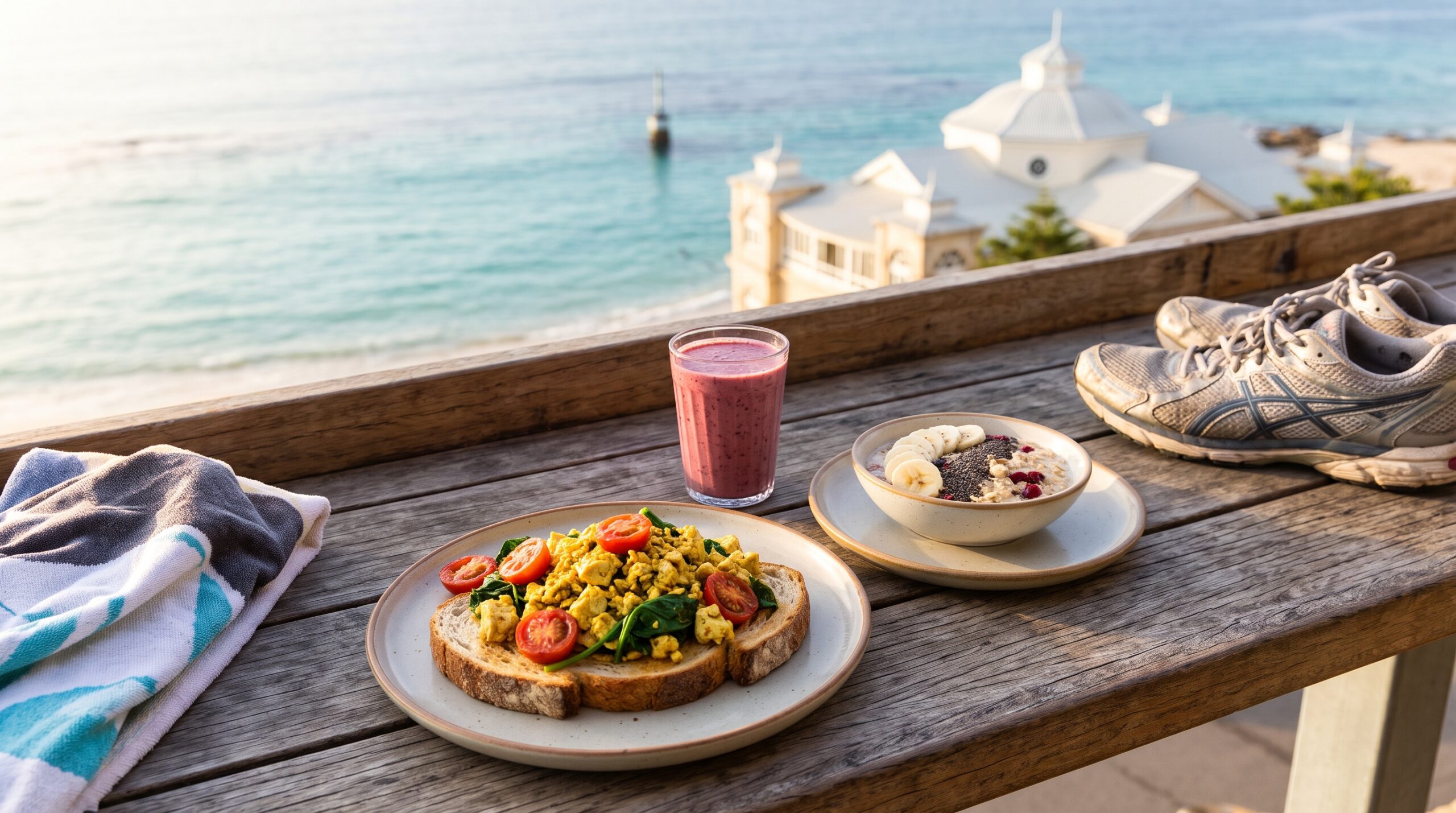
Crumble firm tofu into a pan with a pinch of turmeric, garlic, cherry tomatoes and baby spinach. Serve on two slices of wholegrain sourdough. The tomatoes add vitamin C, which helps your body use the iron in the tofu and greens.
2. Overnight oats with soy milk and seeds
Mix rolled oats, fortified soy milk, a spoon of chia seeds and a spoon of peanut butter in a jar the night before. Top with berries after your run. It’s ready when you get home, which is the whole point.
3. Recovery smoothie
Blend fortified soy milk, a frozen banana, a handful of oats, a spoon of hemp seeds and a scoop of plant protein powder if you use one. Smoothies suit runners who can’t face food straight after a hot summer run. Sports Dietitians Australia lists smoothies among its recovery options.
4. Smashed chickpeas and avocado wrap
Mash a tin of rinsed chickpeas with avocado, lemon juice, salt and pepper. Wrap it in a wholemeal tortilla with lettuce and cucumber. Easy to make the night before and take to work.
5. Soy yoghurt bowl
Use a high-protein soy or Greek-style yoghurt (dairy if you’re vegetarian), add muesli, sliced banana, walnuts and a spoon of flaxseed. Walnuts and flax add plant omega-3.
Plant-Based Recovery Meals for Later in the Day
Recovery doesn’t stop at breakfast. Full glycogen restoration can take a day or more, so Sports Dietitians Australia suggests including carbohydrate-rich foods in later meals and snacks too.
- Lentil bolognese with wholemeal pasta and a side salad
- Tempeh and vegetable stir-fry with brown rice, capsicum and Asian greens
- Black bean and sweet potato burrito bowl with rice, salsa and avocado
- Chickpea and spinach curry with basmati rice and a squeeze of lemon
- Snacks: roasted edamame, hummus with crackers, peanut butter on toast, trail mix
Fuelling After an Ocean Dip
A lot of Perth run clubs finish at the beach, with a swim at Cottesloe or Scarborough then coffee. If that’s you, plan your recovery breakfast around the café stop rather than skipping it. A toastie with tofu or hummus, a smoothie with soy milk, or a bircher bowl will do far more for your next session than a flat white on its own.
In Perth’s summer, you also lose a lot of fluid. Sports Dietitians Australia suggests replacing 125 to 150% of the fluid you lose, which you can estimate by weighing yourself before and after a run. A 1kg drop means about 1.5 litres over the next two to four hours. Salty foods such as bread, crackers and sauces help you hold on to that fluid.
Looking for a route that ends in the water? See our guide to Perth’s best coastal running routes that finish with an ocean swim.
Do Plant-Based Runners Need Protein Powder?
Not necessarily. Food can cover your needs. A powder is simply a convenient option if you are short on time or struggle to eat after a run. If you do want one, our running shop stocks the Amazonia Raw Protein Isolate (vanilla, 1kg), a certified organic, vegan plant protein. If you compete in tested events, check any supplement against the Australian Institute of Sport’s supplements guidance first.
A Sample Plant-Based Day for a Morning Runner
| When | What to eat | Why |
|---|---|---|
| 5:00am | Banana or toast with jam | Quick carbs, easy to digest |
| 7:00am (after run) | Tofu scramble on sourdough, or a soy smoothie | Protein plus carbs for recovery |
| 10:00am | Hummus and crackers, piece of fruit | Keeps energy up |
| 12:30pm | Chickpea and avocado wrap, salad | Protein, iron, vitamin C |
| 3:30pm | Soy yoghurt with muesli and walnuts | Protein, calcium, omega-3 |
| 6:30pm | Lentil bolognese with wholemeal pasta | Refuels for tomorrow’s run |
This is an example, not a prescription. Portion sizes depend on your size, training and appetite.
Frequently Asked Questions
Can you be a vegan runner and still get enough protein?
Yes. Legumes, tofu, tempeh, soy milk, nuts, seeds and wholegrains all contribute protein. Eat a variety across the day and include a protein-rich food at each meal and snack, and most runners will meet their needs.
What should a vegan eat before a morning run?
Something small and carb-based, such as a banana, toast with jam, dates or a small bowl of oats. Keep high-fibre and high-fat foods for after the run so your stomach is settled. For short, easy runs you may not need anything.
Do vegan runners need supplements?
Healthdirect recommends that strict vegans take a vitamin B12 supplement. Other supplements such as iron or vitamin D should be based on a blood test and advice from your GP or dietitian rather than taken just in case.
What is a good plant-based recovery meal after running?
Combine carbohydrate with 15 to 30g of protein. A tofu scramble on toast, a soy milk smoothie with oats and banana, or a lentil pasta dish all work well.
Why do I feel tired since going plant-based?
The most common reason is simply not eating enough, as plant foods are filling but lower in energy. Low iron or B12 can also cause tiredness. If it continues, see your GP for a check rather than guessing.
Find Your Running Crew
Good fuelling makes those early starts easier, and a friendly group makes you want to turn up. Browse our Perth run club directory to find a free, no-pressure club near you, read more in our runners’ guides, or pick up recovery gear in the Perth Running Clubs shop.
This article is general information only and is not medical or dietary advice. For advice that suits you, speak to an Accredited Sports Dietitian or your GP.
Perth Running Clubs may earn a commission from purchases made through links on this page.