
—
Running the Kalamunda and Bickley Valley Trails East of Perth
If you’ve been grinding the same flat river paths and want something that actually tests your legs, the Kalamunda running trails east of Perth are worth the 30-minute drive. Elevation, jarrah forest, valley views, and the kind of quiet that makes you forget the city exists — it’s all here, sitting right on Perth’s doorstep.
This guide covers the key trail running routes around Kalamunda and Bickley Valley, what to expect underfoot, how to link them up, and everything you need to know before heading out.
—
Why Run the Perth Hills at All?
Most Perth running is relentlessly flat. Great for pace work. Not so great for building strength, mental toughness, or the kind of quad punishment that makes you feel like you’ve actually earned your Sunday coffee.
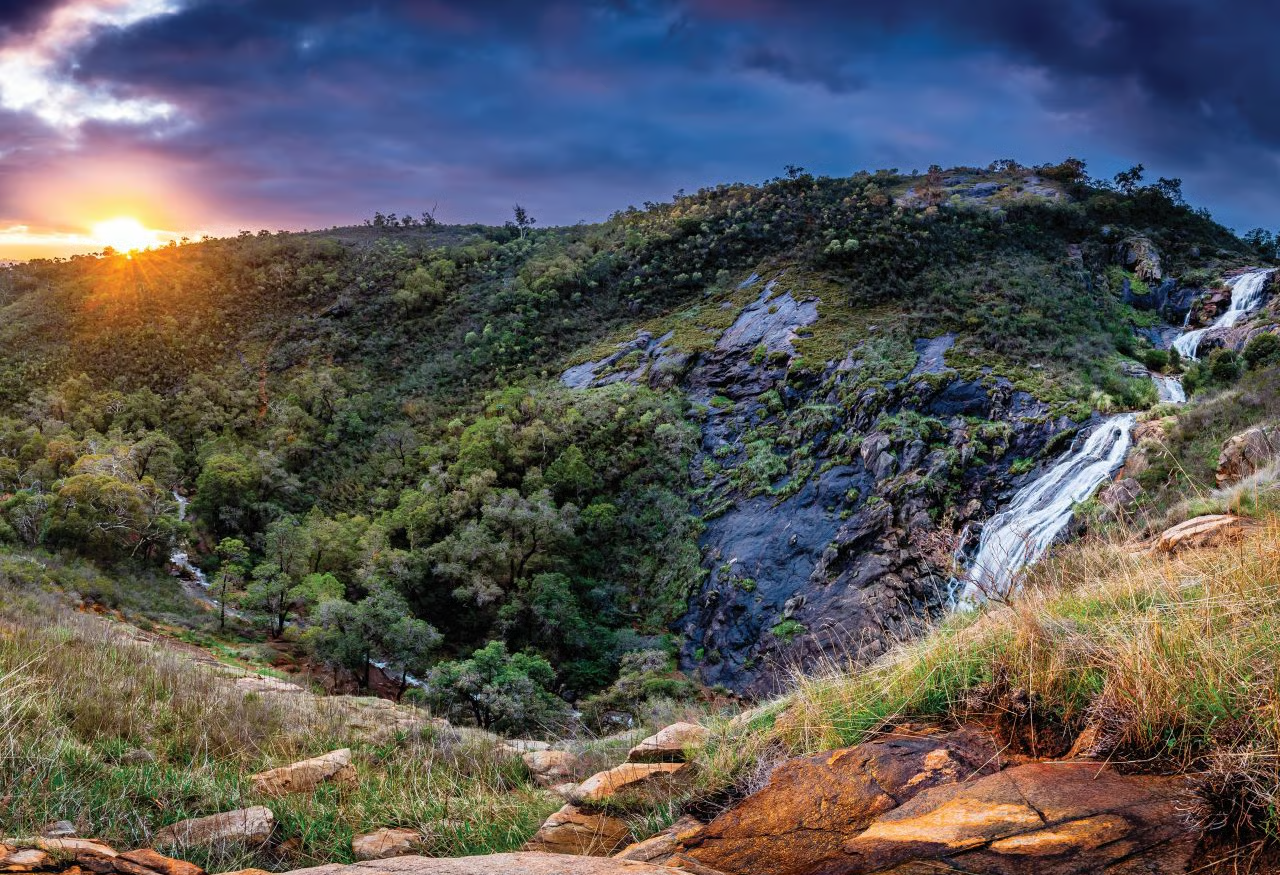
The Perth Hills change that. Routes around Kalamunda sit anywhere from 250 to 400 metres above sea level, which means actual climbs, actual descents, and views back over the metro that remind you why you live here. The trails are mostly well-maintained, signposted, and accessible year-round — though winter brings mud and summer brings heat you should absolutely respect.
—
Getting to Kalamunda
Kalamunda township is roughly 24km east of the Perth CBD. From the city, head east on the Great Eastern Highway then follow signs up into the hills via Kalamunda Road or Mundaring Weir Road depending on your entry point.
Parking is easy. The Kalamunda town centre has free parking, and most trailheads have dedicated bays. Google Maps handles it well — just search the specific trail or reserve you’re targeting.
—
The Key Trail Running Areas
1. Kalamunda Water Tower Trail and Surrounds
This is the most accessible entry point for runners new to the area. Starting from near the Kalamunda town centre, a network of tracks winds through bushland on the escarpment edge, with multiple lookout points offering views west over the Swan Coastal Plain.
Distance options are flexible — you can put together a solid 8–12km loop depending on which fire trails and single tracks you connect. The terrain is a mix of compact gravel, exposed root sections, and rocky outcrops that demand attention on the downhills.
What to expect:
- Moderate difficulty, appropriate for runners with some trail experience
- Rolling hills with a few steep pinches
- Well-used tracks, easy to navigate
- Very exposed in summer — start early
—
2. Kalamunda National Park
The broader Kalamunda National Park covers over 1,400 hectares and is the backbone of trail running Perth Hills. The Bibbulmun Track passes through here, but runners don’t need to go full thru-hike to enjoy it — shorter sections through jarrah and marri forest make for genuinely beautiful running.
The Hewett’s Hill Trail and Kalamunda Trail are the two most popular running routes inside the park. Combined, you’re looking at a 15–18km effort with real climbing involved. Signage is good, but downloading the route or carrying a paper map is still wise — mobile coverage can be patchy once you’re deep in the trees.
Trail characteristics:
- Single track and fire trail mix
- Significant elevation change — expect 400–600m of gain on a longer loop
- Rocky in sections, loose gravel on descents
- Shaded by the canopy for most of the run
This is where the Kalamunda running trail experience really opens up. It’s the kind of running that slows your pace but does things to your fitness that flat kilometres simply can’t replicate.
—
3. Bickley Valley Trail Run Routes
Drop off the escarpment into Bickley Valley and the character of the running changes entirely. The valley floor is greener, cooler, and hemmed in by orchard properties and granite outcrops. It’s one of the best trails near Perth for runners who want scenery alongside the workout.
The Bickley Valley trail run typically starts from the Carmel area and follows a combination of gravel roads and bush tracks through the valley, with options to climb back up to the ridge for a loop finish. A well-executed loop through the valley and back to Kalamunda via the escarpment can cover 12–20km depending on your chosen variants.
What makes Bickley special:
- Apple and stone fruit orchards line sections of the route — the contrast to jarrah scrub is striking
- The valley is noticeably cooler than the ridge, making it more forgiving in warmer months
- Granite boulders and wildflower patches add to the visual interest in spring (August–October)
- Mostly quiet trails — you’re unlikely to be fighting foot traffic on a weekend
For a proper introduction to Bickley Valley trail running, the loop from Carmel Road down through the valley floor and back up via the ridge trail to Kalamunda is the one most local runners recommend.
—
4. Gooseberry Hill National Park
Technically adjacent to Kalamunda, Gooseberry Hill is worth including in any Perth Hills trail running itinerary. The park sits just north of Kalamunda and connects to the broader trail network via fire roads.
Gooseberry Hill Lookout is one of the best vantage points in the metro area — earning it on foot rather than driving up makes it considerably more satisfying. A there-and-back from Kalamunda town through to the lookout is a solid 10km with enough climbing to count.
—
Linking It All Together: A Sample Long Route
For competitive runners wanting a proper long-run day out, here’s a route framework that strings several sections together:
1. Start: Kalamunda town centre carpark
2. Head south through the escarpment tracks toward Hewett’s Hill
3. Drop into Bickley Valley via the descent trail near Carmel Road
4. Loop the valley floor, following orchard-side tracks
5. Climb back to the ridge via the eastern ascent trail
6. Return to Kalamunda via Kalamunda National Park single track
7. Finish: Town centre
Total distance: approximately 22–26km depending on variants chosen. Elevation gain: 700–900m. Allow 2.5–4 hours depending on fitness and how long you spend staring at the view.
This is a legitimate training run for anyone preparing for an ultra or a hilly trail event. It won’t embarrass itself next to any trail in the South West.
—
Trail Running Tips for the Perth Hills
Start early, especially in summer. Kalamunda can read a few degrees cooler than the city, but trails here are exposed in places and heat builds fast. Summer starts before 6am are standard practice among regulars.
Carry water. There are no reliable water points on most of these routes. For anything over 12km, carry at least 1.5L. For summer or long efforts, more.
Trail shoes make a real difference here. The rocky descents and loose gravel sections around Kalamunda will punish road shoes. A proper trail shoe with grip and rock protection is the right call. Browse options in our running shop if you’re looking to upgrade.
Download your route offline. Apps like Strava, AllTrails, or Wikiloc all cover these trails reasonably well. Save the route before you leave home — you’ll thank yourself when signal drops.
Check for fire restrictions and park closures. During high fire danger periods, the Department of Biodiversity, Conservation and Attractions (DBCA) may close sections of Kalamunda National Park. Check the DBCA Parks and Wildlife website before heading out.
—
What to Wear and Carry
For a typical 12–18km outing in the Perth Hills:
| Item | Notes |
|---|---|
| Trail running shoes | Grip and rock plate recommended |
| Hydration vest or handheld | Minimum 1.5L capacity |
| Sun protection | Hat, sunscreen, sunglasses |
| Snacks/gels | For anything over 90 minutes |
| Phone with offline map | Signal can drop mid-route |
| Light layer | Mornings can be cool, especially in winter |
Good quality trail shoes and hydration vests are available through our running shop.
—
Running Clubs That Head to the Hills
You don’t have to run these trails solo. A number of Perth running clubs incorporate trail sessions, including occasional Perth Hills outings. If you’re looking for company on your next Kalamunda adventure, check the Perth run clubs directory to find trail-friendly groups near you.
Running with others on unfamiliar trails is genuinely smarter — better navigation, someone to help if something goes wrong, and someone to confirm that yes, that climb really was as brutal as it felt.
—
Is It Worth the Drive from Perth?
Thirty minutes from the CBD and you’re in jarrah forest, running trails with proper elevation, views over the city, and enough route options to keep things interesting for years.
For anyone training for trail events, marathons with elevation, or just tired of flat roads — yes, obviously. The Kalamunda running trails and Bickley Valley routes are among the best trails near Perth for runners who want more than the river foreshore offers.
Put it on the calendar. Go before the weather turns hot, or get up early enough that it doesn’t matter.
—
More Perth Running Routes and Guides
Looking for more local routes and running resources? Browse the full Perth running guides and blog for more trail guides, training tips, and gear reviews across Western Australia.
—
Perth Running Clubs may earn a commission from purchases made through links on this page.